Non-Destructive Digging and Hydro Excavation
The safest way to uncover buried utilities and clear away stubborn debris without any damage.

Damage-Free Excavation
Non-destructive digging is a safe, precise excavation method used to expose underground services without the risk of damage. Using high-pressure air or water combined with industrial vacuum extraction, we carefully break up and remove soil while preserving pipes, cables, and
surrounding infrastructure.
Locate, Expose, Protect
This technique is ideal for locating utilities, trenching, and working in sensitive areas where traditional excavation methods may cause costly damage or disruption. It significantly reduces the risk of striking underground assets while maintaining a clean, controlled worksite.
Efficient, accurate, and non-invasive—non-destructive digging provides a safer alternative to mechanical excavation, protecting both your property and essential services.
Removing Semi‑ Solid Waste
Removing semi‑solid waste is all about handling materials that are too thick to pump like liquids but not firm enough to scoop like solids. The goal is to safely collect, transport, and dispose of this waste to prevent contamination and keep facilities running smoothly.
Semi‑solid waste—such as sludge or thick industrial residues— requires specialised tools and proper handling. Effective removal improves hygiene, reduces odours, and supports environmental compliance.
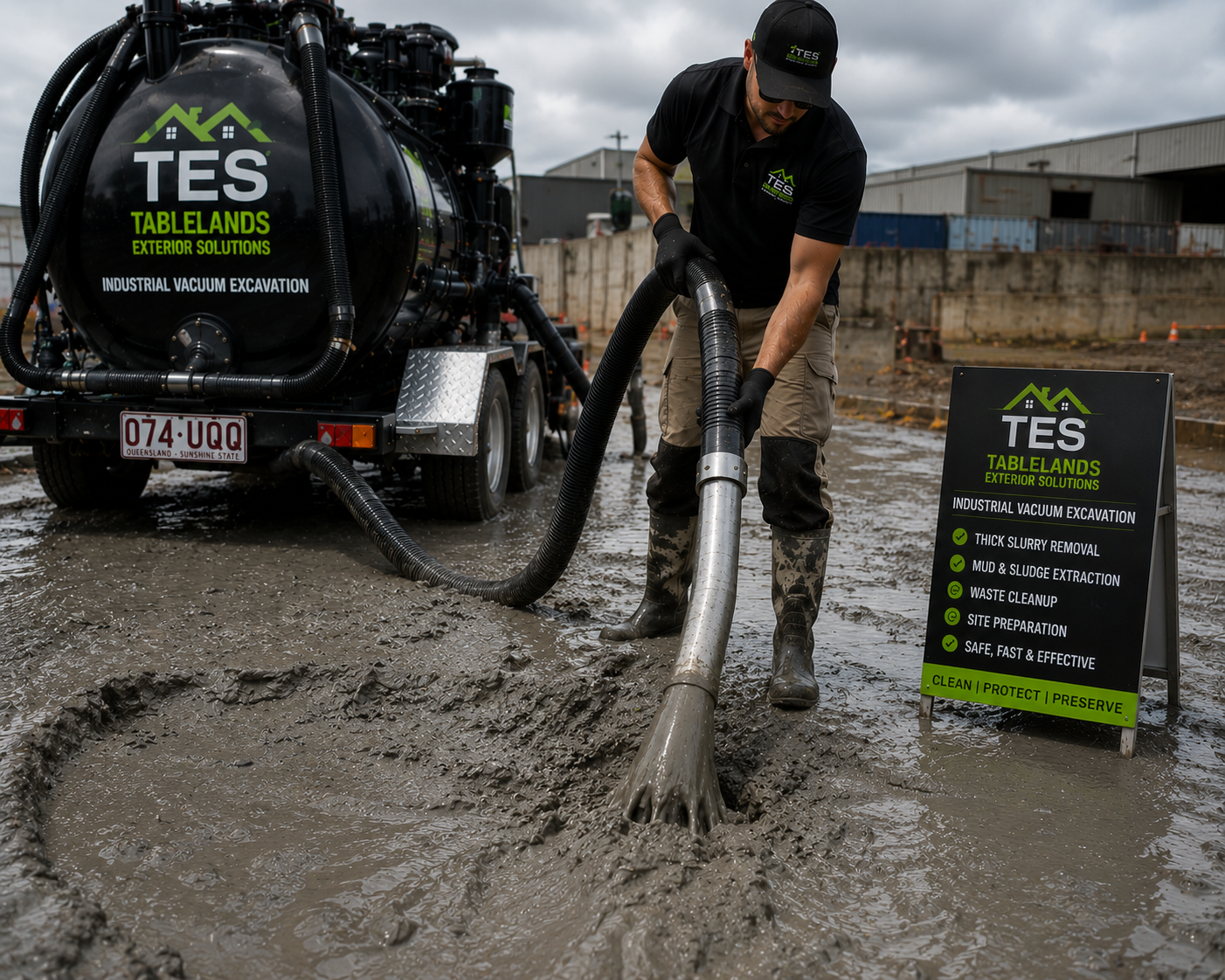

Waste Identification — Determine the type and consistency of the semi‑solid waste to choose the right removal method.

Safe Handling — Use protective gear and follow safety protocols to avoid exposure.

Proper Disposal — Transport the waste to approved treatment or disposal facilities to minimise environmental impact

Equipment Use — Vacuum trucks, dewatering systems, or mechanical scrapers help remove and process the material efficiently.
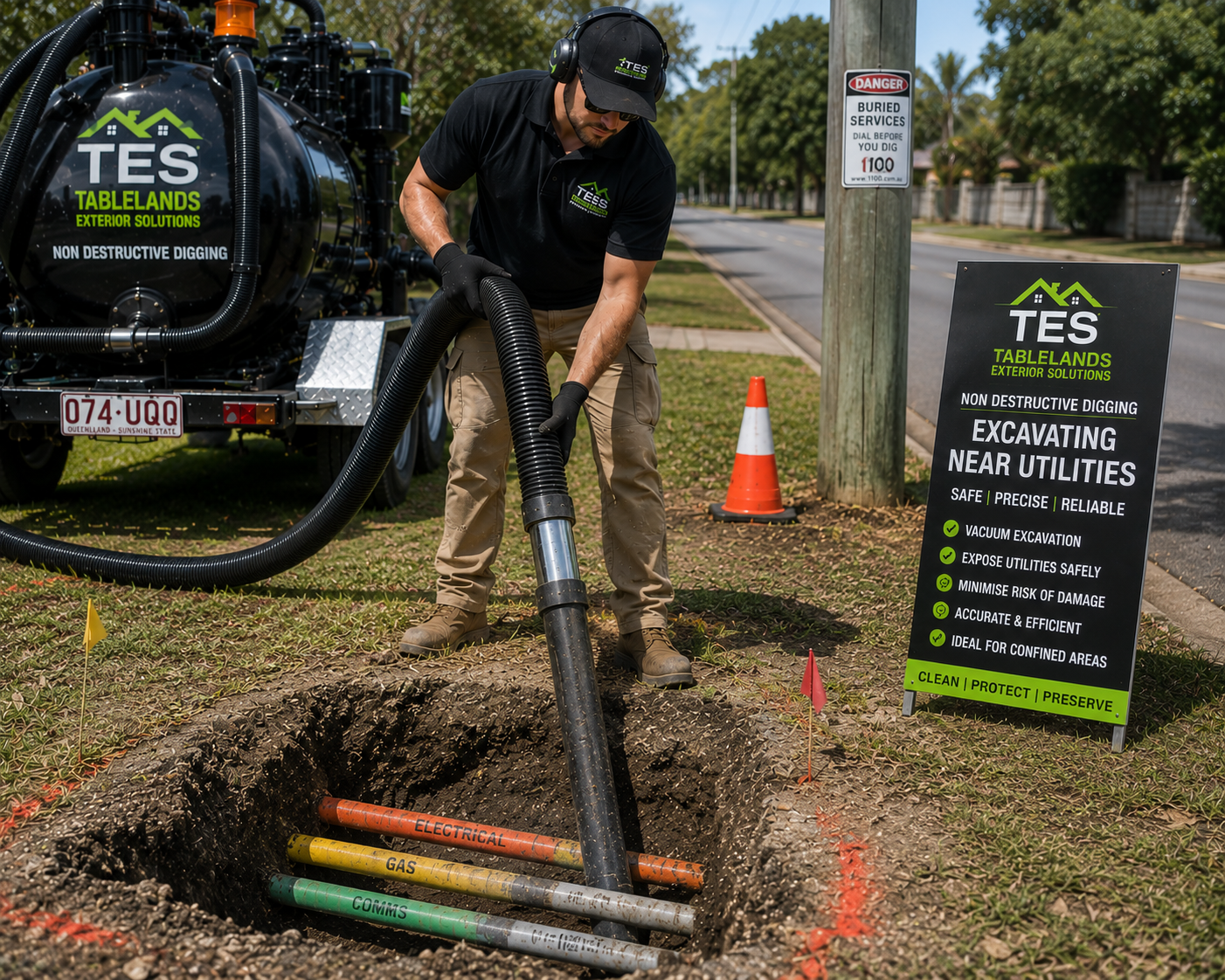
Excavating Near Utilities
Excavating near underground utilities demands precision, planning, and strict safety control. The goal is simple: prevent damage to buried lines—electric, gas, water, telecom—that could cause outages, injuries, or costly repairs.
Utility Locating — Always identify and mark underground lines before digging to avoid accidental strikes.
Safe Digging Practices — Use hand tools when approaching marked zones and maintain required clearance distances
Risk Awareness — Know the hazards associated with each type of utility, from electrical shock to gas leaks.
Communication Protocols — Coordinate with utility providers and onsite teams to ensure everyone understands the dig plan.
Cable Location
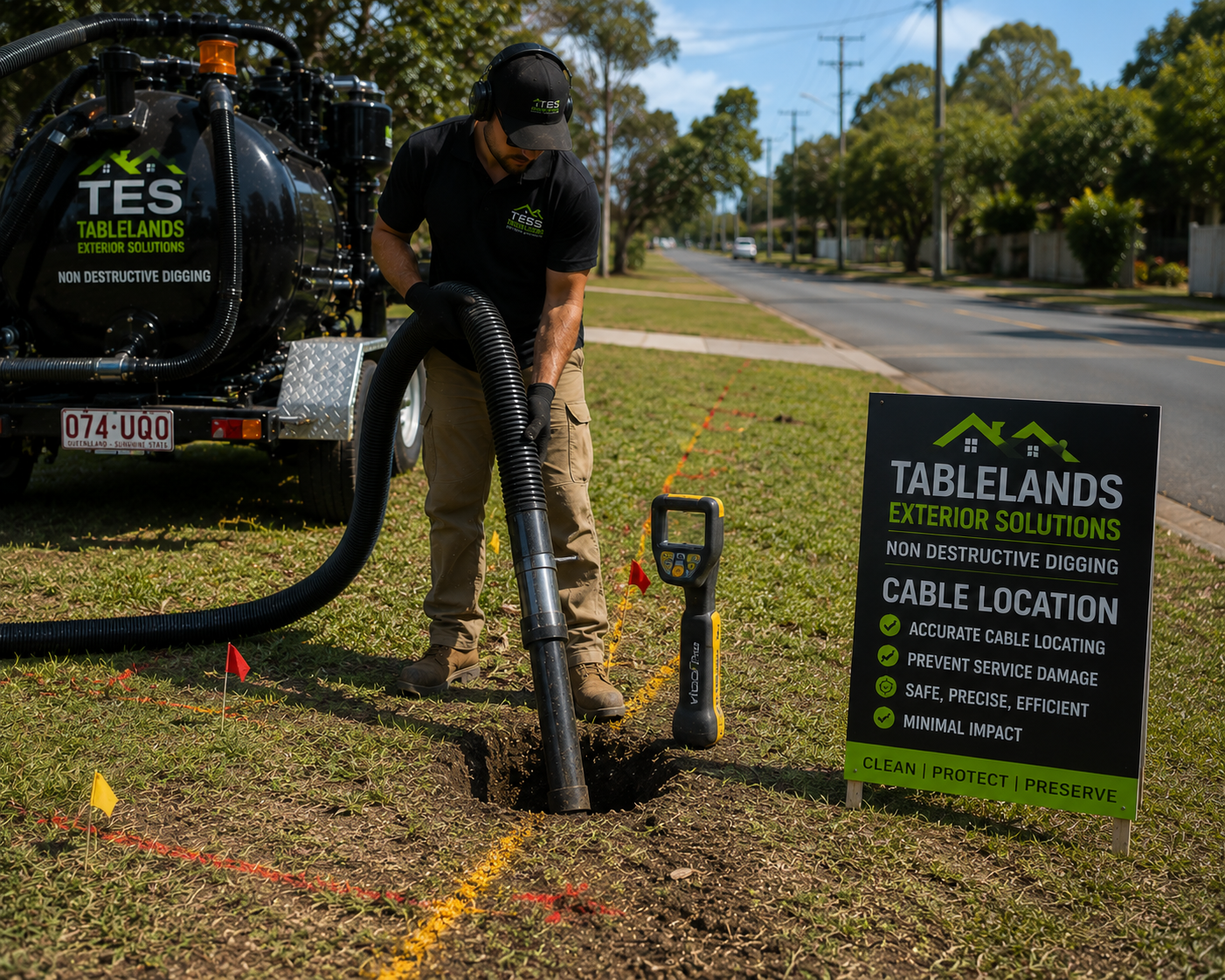
Cable location is the process of detecting and marking underground cables to prevent accidental strikes during excavation or construction. Accurate locating protects workers, avoids service outages, and keeps projects compliant with safety standards.
Detection Tools — Use electromagnetic locators or ground‑ penetrating radar to trace buried cables.
Marking Procedures — Clearly mark cable paths on the ground to guide safe digging.
Risk Prevention — Identifying cable depth and alignment reduces the chance of costly or dangerous hits.
Pre‑Dig Planning — Combine maps, locator readings, and site surveys for a complete understanding of underground conditions.
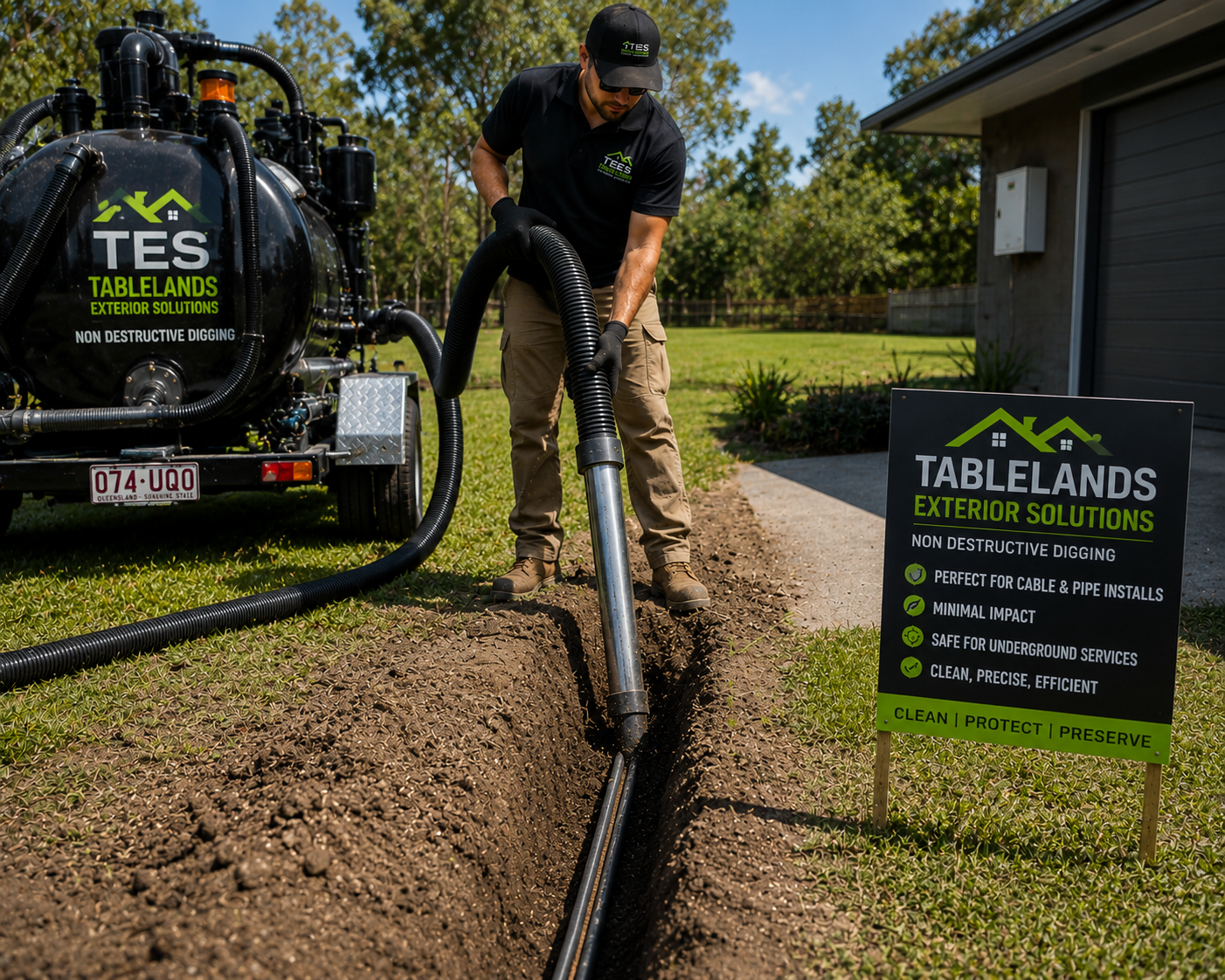
Trenching for New Utilities
Trenching for new utilities involves creating narrow, controlled excavations to install essential services like water, power, gas, and communication lines. The focus is on accuracy, stability, and safety to protect workers and ensure long‑lasting infrastructure.
Site Assessment — Evaluate soil conditions, existing utilities, and environmental factors before digging.
Trench Design — Determine trench depth, width, and support systems based on the type of utility being installed.
Safety Controls — Use shoring, shielding, or sloping to prevent collapses and keep workers safe.
Installation Workflow — Lay pipes or cables, backfill carefully, and compact the soil to maintain stability and prevent future ground settlement.
Well‑planned trenching ensures reliable utility placement and minimises risks during and after construction. If you want, I can also create a more technical version or a safety‑ poster style summary.
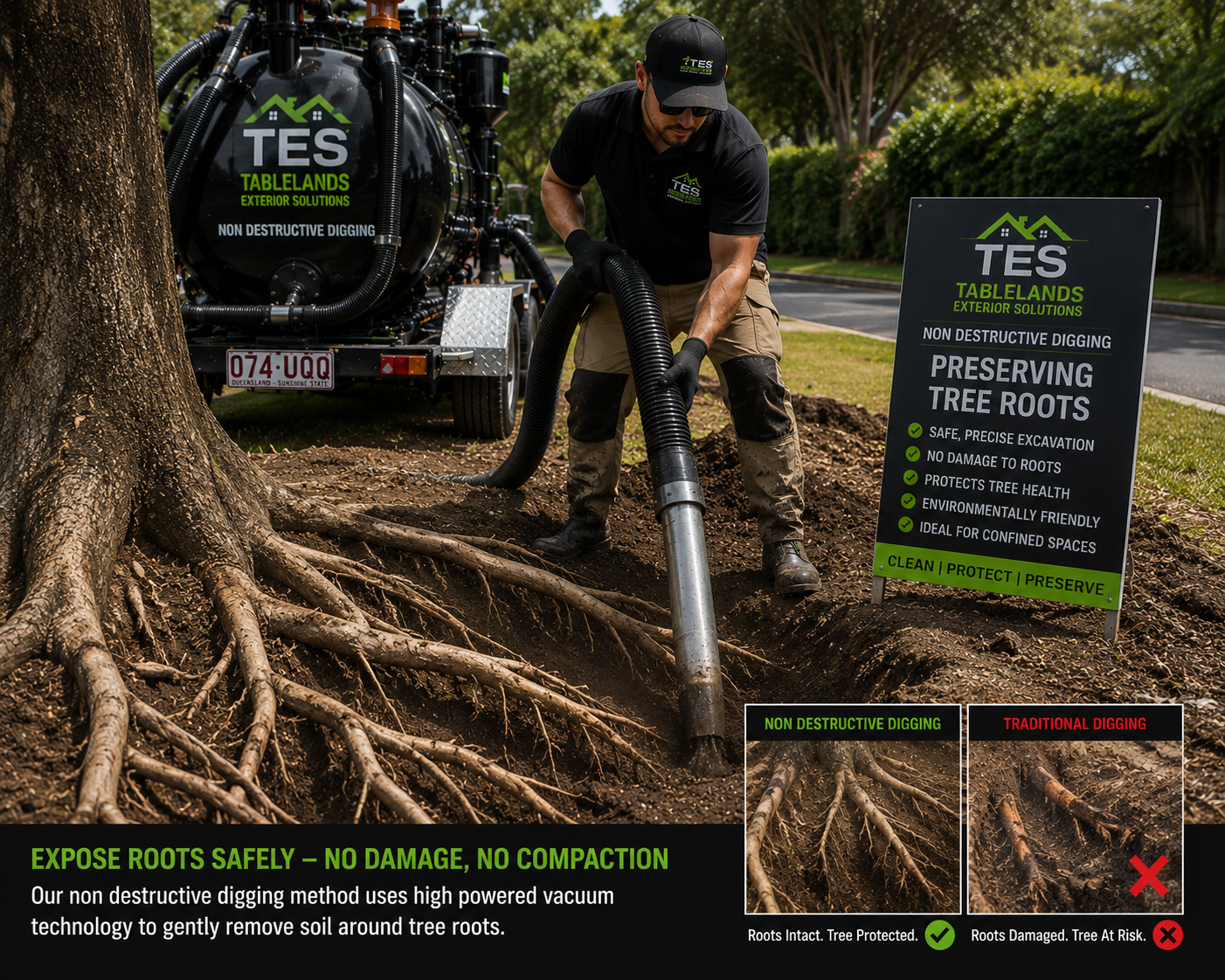
Tree Care: Minimising Root Damage During Removal
Tree removal near sensitive root zones requires careful planning and gentle techniques to protect surrounding vegetation and maintain soil health. The aim is to remove the targeted tree while preserving the stability and vitality of nearby roots.
Root zone Assessment — Identify the critical root area to understand where digging or cutting must be avoided
Low‑Impact Removal — Use controlled cutting, sectional dismantling, and lightweight equipment to reduce soil compaction.
Selective Root Pruning — Only prune roots when necessary, making clean cuts to support proper healing.
Soil Protection — Apply mulch, mats, or barriers to shield the ground from heavy machinery and prevent root stress.
Thoughtful removal practices help maintain the health of nearby trees and ensure long‑ term landscape stability.
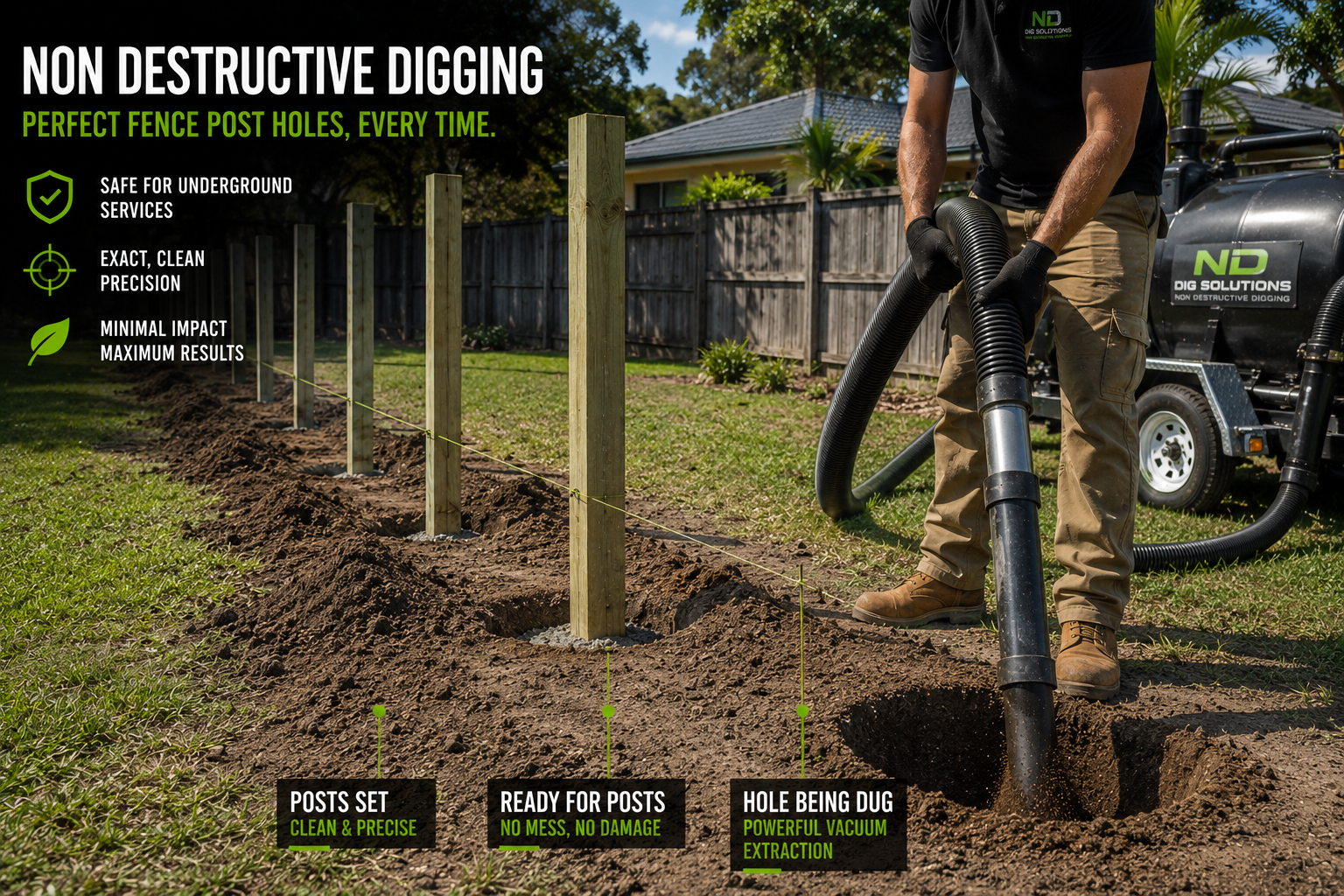
Fence Posts
Fence posts form the structural backbone of any fence, providing stability, alignment, and long‑ term durability. Proper installation ensures the fence can withstand weather, soil movement, and daily wear.
Post Placement — Measure and mark consistent spacing to maintain straight, even fence lines.
Hole Reparation — Dig holes deep enough for stability, typically one‑ third of the post’s length.
Setting Methods — Use concrete, compacted gravel, or driven posts depending on soil type and fence design.
Alignment Checks — Level and brace posts to keep them plumb while the base material sets.
Strong, well‑set fence posts create a reliable foundation for any fencing project.
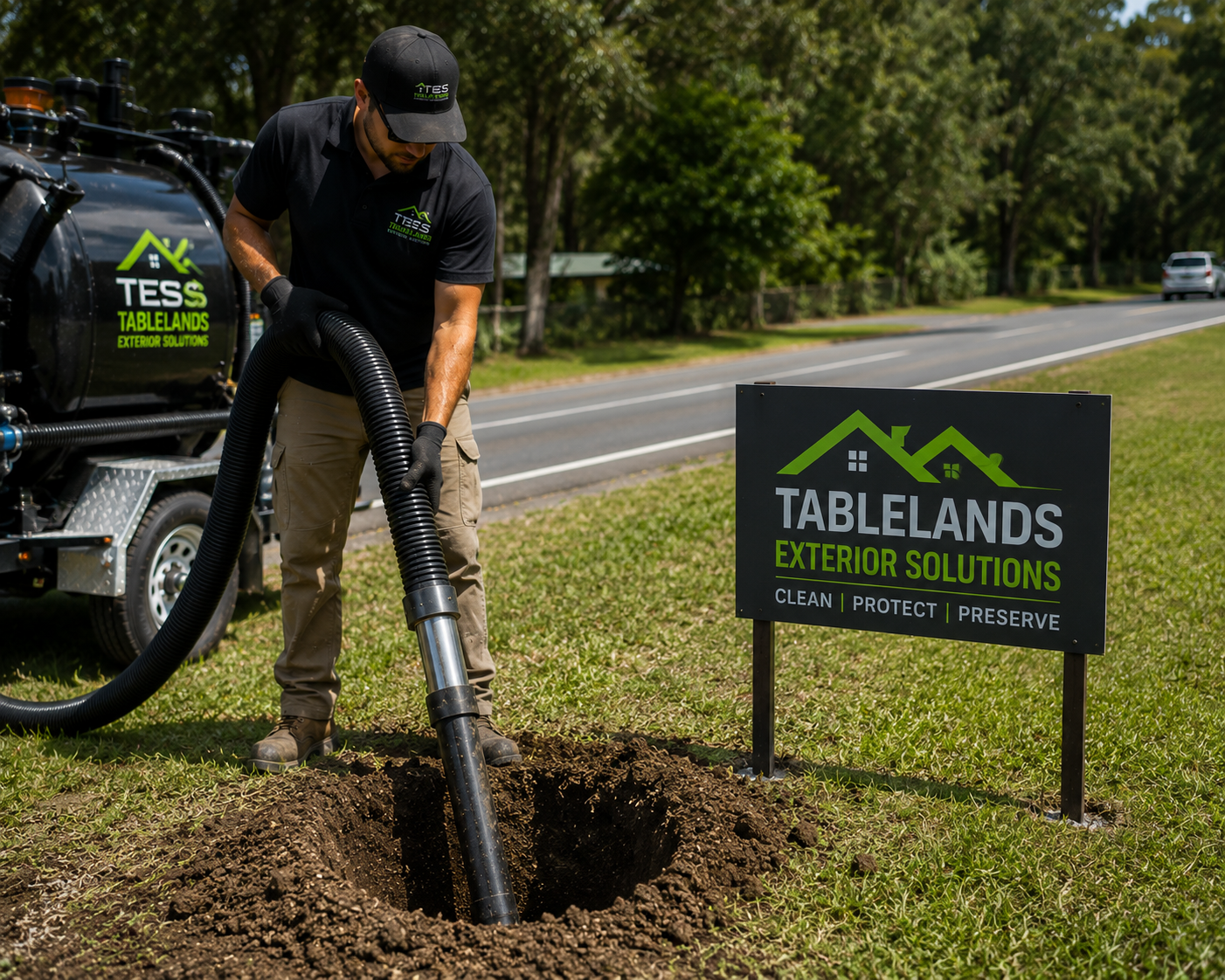
Sign Post Holes
Sign post holes are precisely dug openings designed to securely anchor signs for roads, pathways, parks, and work sites. Properly prepared holes ensure the sign stays upright, stable, and visible in all conditions.
Site Marking — Identify exact sign locations to maintain alignment, visibility, and compliance with placement standards.
Hole Dimensions — Dig holes deep and wide enough to support the post, typically one‑ third of its total length.
Stabilising Materials — Use concrete, gravel, or compacted soil to secure the post and prevent shifting.
Alignment Checks — Level and brace posts to keep them straight while the base material sets.
Well‑ constructed sign post holes ensure long‑ lasting, reliable signage that stands firm in all environments.
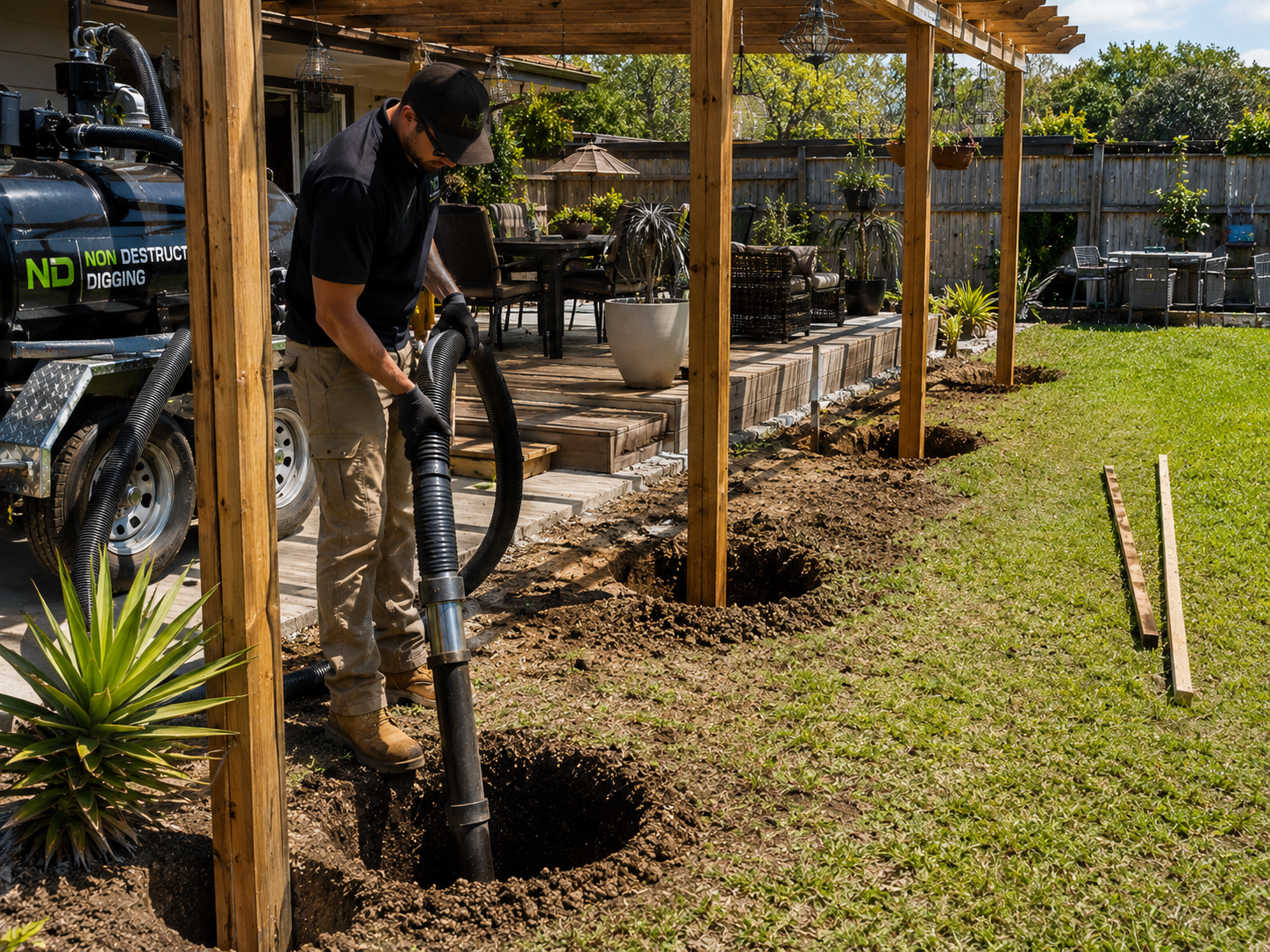
Pergola Post Holes
Pergola post holes are deep, reinforced foundations designed to support the weight and structure of a pergola. Properly preparing these holes ensures long‑ term stability, prevents leaning, and keeps the entire framework secure through weather and soil movement.
Site Layout — Measure and mark post locations to maintain accurate spacing and a square, balanced pergola frame
Hole Depth — Dig holes deep enough for structural support, often 600–900 mm depending on soil and pergola height.
Reinforcement — Use concrete footings or brackets to anchor posts firmly and prevent shifting.
Alignment Checks — Level and brace posts to keep them plumb while the concrete cures.
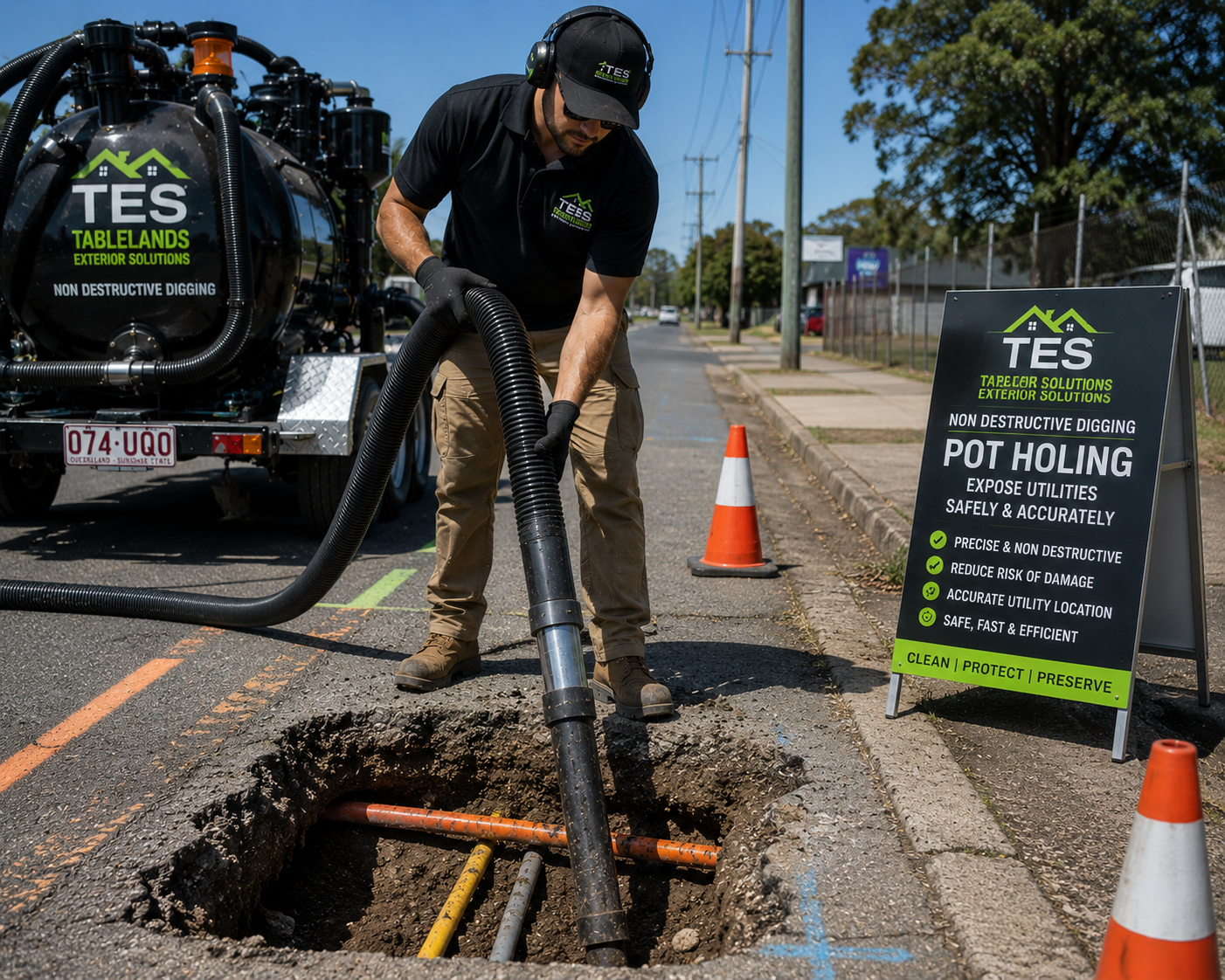
Potholing: Creating Precise Holes to Varying Depths
Potholing is the careful excavation of small, accurate holes to expose underground utilities without causing damage. It’s a key safety step in construction and civil works, ensuring crews know exactly where cables, pipes, and services are located before major digging begins.
Precision Digging — Hand tools or vacuum excavation are used to uncover utilities with minimal disturbance.
Depth Verification — Holes are dug to specific depths to confirm the exact position of buried services.
Risk Reduction — Accurate potholing prevents strikes, service outages, and costly repairs.
Site Planning — Verified utility locations guide safe trenching, drilling, and excavation work.
Potholing provides the clarity needed to dig confidently and safely across any project site.
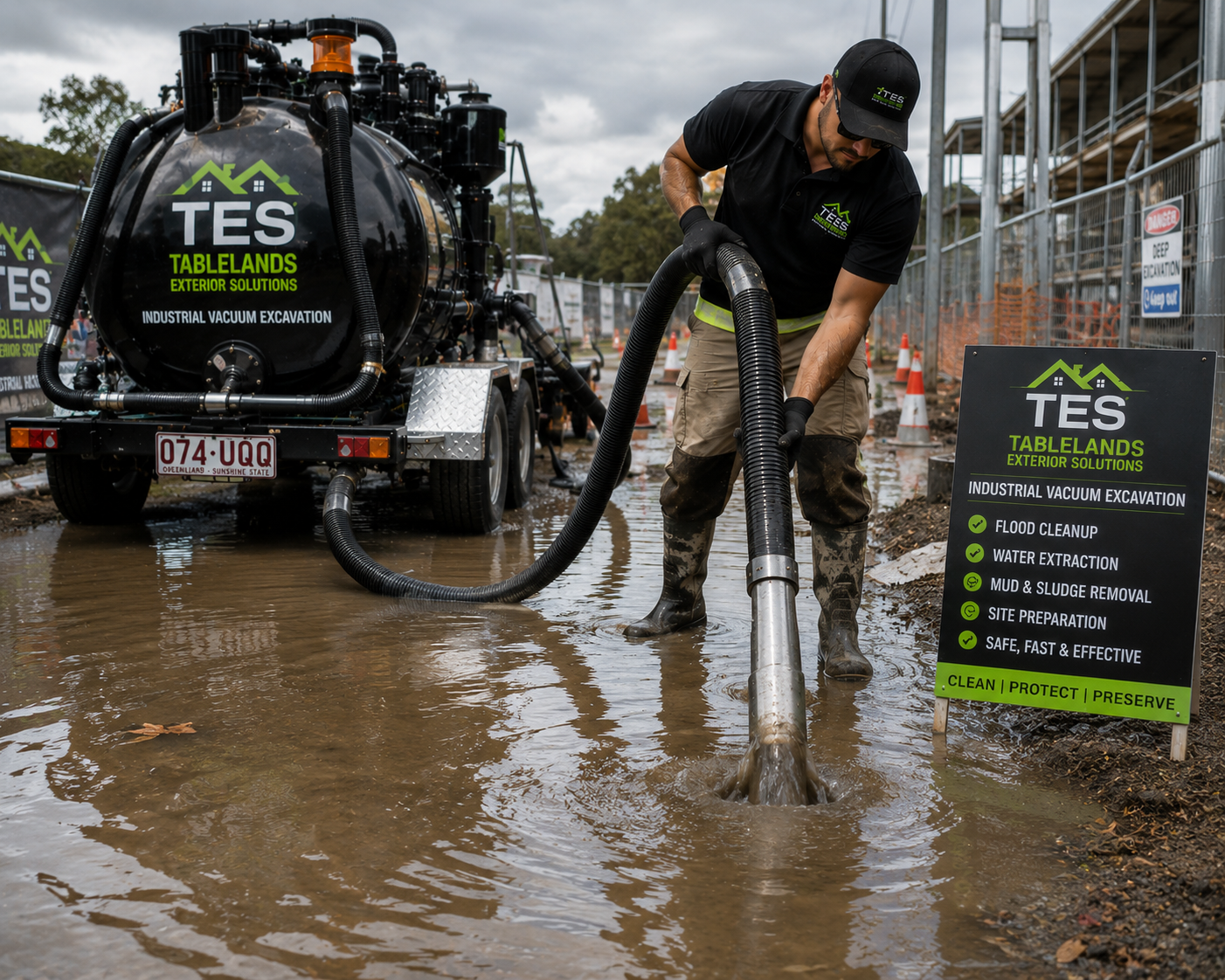
Water Extraction
Water extraction is the rapid removal of unwanted water from flooded areas, construction sites, or damaged structures. The goal is to prevent further deterioration, reduce safety hazards, and restore the area to a usable condition as quickly as possible.
Assessment First — Identify the water source, depth, and affected materials to choose the right extraction method.
Mechanical Removal — Pumps, wet vacuums, and extraction units remove standing water efficiently.
Moisture Control — Dehumidifiers and air movers help dry out remaining moisture to prevent mould and structural damage.
Safety Measures — Electrical hazards, contaminated water, and unstable surfaces require strict safety protocols
Effective water extraction protects property, speeds up recovery, and prevents long‑ term damage.